If your steering wheel sits a little crooked on the drive down Shasta Dam Boulevard, or your car drifts toward the shoulder every time the pavement gets wet, you’re not imagining it. A wheel alignment is often the fix. Booking a wheel alignment Shasta Lake City, CA drivers can count on before the winter rains arrive is one of the smartest moves you can make this fall.
Autumn in Shasta County brings the first real storms, slick roads after a long dry summer and, before long, chain controls on the mountain routes north and east of town. A car pulling to one side or an off-center steering wheel may feel like a small annoyance in August. On a rain-soaked curve in November, it matters a lot more.
Below, we walk through the warning signs of misalignment, what knocks your wheels out of line, why wet roads make it feel worse, what happens during an alignment at our shop and when pulling points to worn parts instead. We finish with answers to the questions we hear most.
Why Fall Is the Right Time to Check Your Alignment in Shasta Lake City, CA
Around here, nearly all of the year’s rain tends to fall between October and April, and November is usually when the wet season gets going in earnest. After months without rain, oil and grime build up on the pavement, and the first storms bring it to the surface. That’s when small handling problems you barely noticed all summer suddenly become obvious.
Fall also follows the busiest season on the lake. Many of our customers spend summer weekends towing boats to marinas and launch ramps, bouncing down gravel roads and sitting in heavy traffic. By the time the boats are put away, plenty of vehicles have picked up a slight pull or a steering wheel that no longer sits straight.
Then there’s winter travel. Trips up I-5 toward Lakehead, Dunsmuir and Mount Shasta, or out SR-299 and SR-44, put your steering and tires to work on curves, grades and wet or icy pavement. Caltrans may require chains on some of these routes as early as November, and you can check current conditions on Caltrans QuickMap before you head out.
A front end alignment paired with a steering and suspension check now, before the heavy storms, means you start winter with a car that goes where you point it. That kind of predictable handling gives you real peace of mind when the weather turns.
Warning Signs: Pulling, Wandering and an Off-Center Steering Wheel
Most alignment problems show up gradually. Here are the signs we tell drivers to watch for:
- Car pulling to one side. On a flat, straight road, you shouldn’t have to hold the wheel against a steady tug left or right.
- An off-center steering wheel. If the logo sits tilted while you’re driving straight, the wheels and steering no longer agree.
- Wandering. The car drifts within the lane and needs constant small corrections, especially at highway speed.
- Uneven tire wear. Tread worn on one edge, or a feathered, saw-tooth feel across it, often points to a toe or camber problem.
One important note: pulling isn’t always alignment. Uneven tire pressure is a common culprit, so check your pressures first. A tire with an internal defect can cause what’s called radial pull, and a sticking brake caliper can drag the car to one side. If your car pulls mainly when you hit the brakes, our brake repair team should take a look.
That’s why we start with a careful inspection rather than assumptions. Searching “wheel alignment near me” is a fine first step, but you want a shop that finds the actual cause instead of adjusting angles and hoping the pull goes away.
How Potholes, Curbs and Rough Back Roads Knock Your Wheels Out of Line
Your alignment is set to precise angles measured in fractions of a degree, so it doesn’t take much to change them. The most common causes we see:
- Potholes. Winter rain loosens pavement, and potholes multiply as the season goes on. One hard hit can bend a component or shift an adjustment.
- Curbs. Sliding into a curb while parking sends a jolt straight through the wheel into the steering linkage.
- Rough back roads. Gravel and washboard roads to campgrounds, trailheads and boat launches shake parts loose over time.
- Towing and heavy loads. Pulling a boat or hauling a full bed puts extra stress on the front end.
Some roads around the county also still see heavy trucks and ongoing repair work, which can leave rough patches behind. Drive them often enough and your alignment slowly creeps out of spec.
If you notice signs you need a wheel alignment after hitting a pothole — a new pull, a crooked wheel or a fresh vibration — don’t wait for your next oil change to mention it. The sooner the angles are corrected, the less uneven wear your tires pick up.
Why Misalignment Feels Worse on Wet Roads and Mountain Curves
Drivers often ask us, “Why does my car pull to the right on wet roads when it seemed fine all summer?” There are a few reasons.
On dry pavement, tires have plenty of grip, which masks a mild alignment issue. On wet roads, grip drops and the tread has to push water out of the way. If misalignment has worn your tires unevenly, one side may have less effective tread than the other, and that difference shows up as a pull or a floaty feel. Many roads are also crowned to shed water, which can exaggerate a pull that’s already there.
Tread depth matters too. NHTSA’s tire guidance encourages drivers to check pressure monthly and keep an eye on tread, since worn tires are more prone to hydroplaning. Many experts suggest watching closely once tread approaches 4/32 of an inch in wet weather, though your tire maker’s guidance is the best reference.
Mountain curves add another layer. On a winding grade, you want the car to turn in predictably and settle without a fight. Misalignment can make steering feel twitchy or slow, and with chains on, an existing pull often feels more pronounced. For wheel alignment before winter driving in Northern California, the goal is simple: a car that tracks straight, steers smoothly and wears its tires evenly when roads are at their worst.
What Happens During a Wheel Alignment at Bryant Automotive
Here at Bryant Automotive, we’ve been caring for vehicles in Redding, CA and Shasta Lake City, CA since 1968, and we don’t believe in guesswork. Our alignment process typically looks like this:
- Conversation and test drive. We ask what you’re feeling and drive the car to confirm it.
- Tire check. We set pressures and read tread wear patterns, which tell us a lot about how the car has been tracking.
- Steering and suspension inspection. Before touching any angles, our ASE Certified technicians check tie rods, ball joints, bushings and wheel bearings.
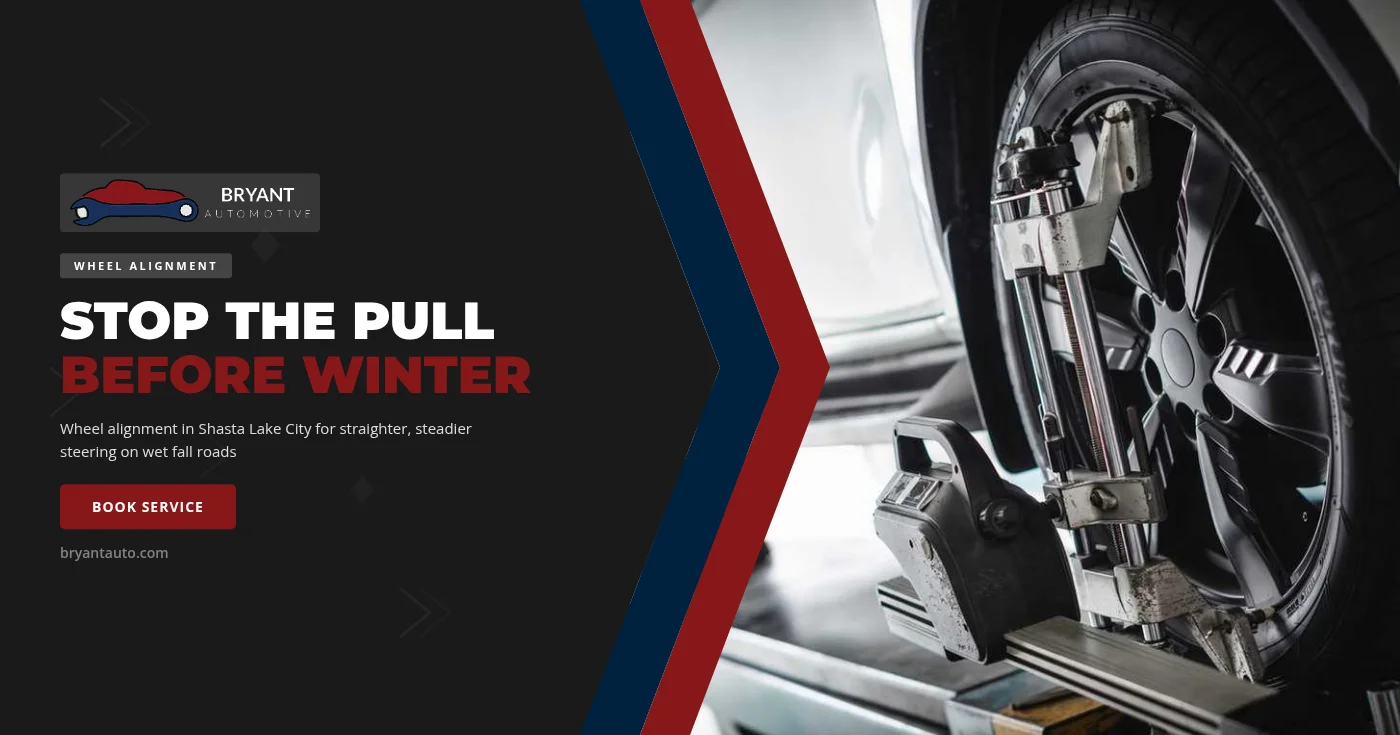
- Measurement and adjustment. On the alignment rack, we measure camber (inward or outward tilt), caster (the tilt of the steering axis) and toe (whether the wheels point in or out), then adjust them to the manufacturer’s specifications.
- Before-and-after readings and a road test. We show you where the angles started and finished, then confirm the wheel is centered and the pull is gone.
If we find anything beyond the alignment itself, we explain it in plain language and give you a written estimate. No work is performed without your approval, and our no surprise fees policy means your bill won’t hold any shocks.
A quick word on alignment versus balancing, since people mix them up: alignment sets the angles of the wheels relative to the car, while balancing evens out weight around a tire so it spins smoothly. Pulling usually points to alignment; a vibration that grows with speed often points to balance.
When Alignment Points to Worn Steering or Suspension Parts
Sometimes an alignment check shows the real problem lies deeper. If the steering wheel goes crooked again a few weeks after an adjustment, or the car never stops wandering, worn components are often to blame. Parts we commonly find worn include:
- Tie rods, which connect the steering rack to the wheels; looseness causes wandering and a vague feel.
- Ball joints, the pivot points of the front suspension; wear can bring clunks and shifting angles.
- Control arm bushings, rubber mounts that crack and soften with age and heat.
- Shocks and struts, which control how the car settles over bumps and through curves.
Our hot summers are tough on rubber suspension parts, and years of rough roads add up. That’s why a full steering and suspension check is part of every alignment we do. Replacing a worn part first and then aligning the car means the fix actually lasts.
We handle suspension and steering, shocks and struts, brakes and much more under one roof — browse all of our auto repair services for the full list. Qualifying repairs are backed by our 36-month/36,000-mile parts warranty with nationwide labor coverage, so you’re protected even if winter travel takes you far from home.
Frequently Asked Questions About Wheel Alignment in Shasta Lake City, CA
How often should I get a wheel alignment in Shasta County?
Many sources suggest a check about once a year, plus any time you hit a pothole or curb hard, notice a pull or install new tires. Recommendations vary by manufacturer, so your owner’s manual is the best guide. With rough back roads and winter weather, a yearly fall check makes a lot of sense here.
How long does an alignment take for drivers in Shasta Lake City?
When no parts need replacing, an alignment often takes around an hour, though it depends on the vehicle. You’re welcome to relax in our climate-controlled waiting area with free WiFi, complimentary coffee and a pet-friendly space, or ask about our shuttle service.
Do I need an alignment after getting new tires?
It’s a good idea. New tires are an investment, and an alignment helps them wear evenly from day one instead of picking up the old wear pattern.
Should I get an alignment before winter driving with chains?
Yes. Chains and slick mountain roads amplify any pull or wander, so correcting the alignment beforehand helps the car feel steadier and more predictable.
Schedule Your Wheel Alignment in Shasta Lake City, CA Before the Storms
Don’t let a car pulling to one side or an off-center steering wheel follow you into the rainy season. Since 1968, Bryant Automotive has served generations of families across Redding, Anderson, Shasta Lake City and Palo Cedro, CA with thorough, transparent service and technicians who take time to explain. When you need wheel alignment Shasta Lake City families trust, we’re ready to help. Contact us today to schedule your alignment and head into winter steering straight.
Why does my car pull to one side or have a crooked steering wheel on wet roads?
If your car drifts toward the shoulder when the pavement gets wet, or your steering wheel sits tilted while you’re driving straight, your wheel alignment may be out of spec. We see it often this time of year, after a summer of towing boats, bouncing down gravel roads and dodging potholes. Wet roads reduce grip, so a pull you barely noticed in August can feel much stronger once the rain starts.
Here at Bryant Automotive, we don’t just adjust angles and hope for the best. Our ASE Certified technicians look for the real cause first:
- Tire pressure and wear — uneven pressure or tread can mimic an alignment problem.
- Brakes — a sticking caliper can drag the car to one side.
- Steering and suspension parts — worn tie rods, ball joints or bushings keep an alignment from holding.
- Camber, caster and toe — measured and set to the manufacturer’s specifications, with before-and-after readings.
You’ll get a clear explanation and a written estimate for anything beyond the alignment, and no work is performed without your approval. We’ve served families across Redding, Anderson, Shasta Lake City and Palo Cedro since 1968, and we’d be glad to help you head into winter with steering that feels straight and steady.
Want the full rundown on warning signs, wet-road handling and what to expect at our shop? Read our complete guide to fixing pulling and off-center steering before winter rains.
Need it looked at?
Written estimate before we start. Nothing gets done without your OK.